
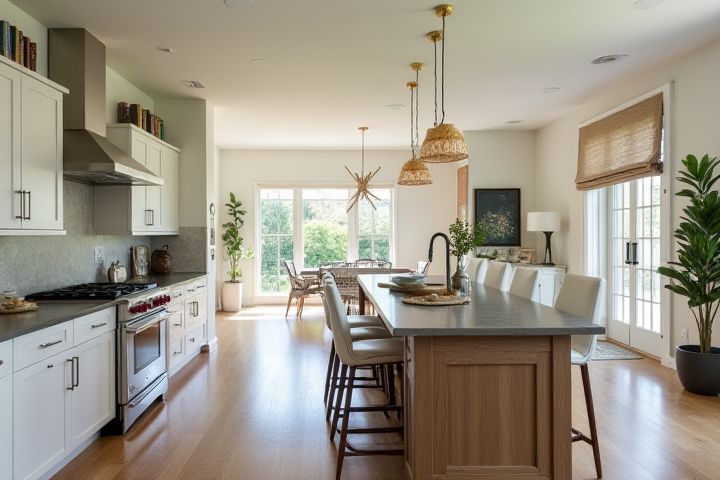
To design a house with an open floor plan, prioritize spatial flow to enhance connectivity between living, dining, and kitchen areas. Ensure ample natural light through strategically placed windows and doors, creating an inviting atmosphere. Select multifunctional furniture that promotes versatility and adaptability in your space, making it easier to arrange for gatherings or cozy evenings. Incorporate visual elements, such as area rugs or ceiling beams, to subtly define different zones without sacrificing openness. Consider using neutral color palettes to unify the overall aesthetic while allowing for personalized decor throughout your home's expansive layout.
How To Design A House With Open Floor Plan
Prioritize Spatial Flow
An open floor plan encourages seamless spatial flow, allowing natural movement between the kitchen, dining, and living areas. To enhance connectivity, consider using consistent flooring materials, such as hardwood or large tiles, across these spaces, creating visual continuity. Incorporate large windows and sliding glass doors to invite natural light, making the environment feel more expansive. You can also utilize multifunctional furniture, like a kitchen island with seating, to enhance usability while maintaining an airy layout.
Opt for Minimalistic Furniture
Designing a house with an open floor plan emphasizes a seamless flow between living areas, enhancing spaciousness and light. Incorporate minimalistic furniture that prioritizes functionality and simplicity, ideally using pieces with clean lines and neutral colors to maintain an airy aesthetic. Opt for lightweight, versatile items, such as modular sofas and multipurpose tables, which can easily adapt to your lifestyle while avoiding visual clutter. Focus on maximizing natural light and unobstructed sightlines to create a harmonious living environment that feels both expansive and inviting.
Use Consistent Flooring
Incorporating a consistent flooring choice throughout your open floor plan enhances visual continuity and spatial flow, making your home feel larger and more inviting. Opt for materials like hardwood or large-format tiles that create a seamless aesthetic while also providing durability and ease of maintenance. Consider the color and texture of the flooring to ensure it complements your overall design theme, whether it's modern, rustic, or minimalist. By selecting a unified flooring option, you can effortlessly unify different living areas, from the kitchen to the living room, creating a cohesive atmosphere that enhances the effectiveness of an open layout.
Integrate Natural Lighting
Incorporate large windows or sliding glass doors to maximize the influx of natural light, ideally facing south or west for optimal sun exposure. Skylights can significantly enhance brightness, especially in centrally located areas of your open floor plan, adding both aesthetics and energy efficiency. Utilize light-reflective surfaces, such as light-colored walls and ceilings, to amplify daylight distribution throughout your home. Consider an open kitchen-living area design, allowing light to flow freely and create a spacious ambiance that connects indoor and outdoor spaces seamlessly.
Define Zones with Rugs
Incorporating rugs to define zones in an open floor plan enhances both functionality and aesthetic appeal. Choose area rugs at least 5' x 8' for seating areas to anchor furniture and differentiate spaces effectively. Consider color, texture, and pattern to create visual boundaries; for instance, a bold geometric pattern can energize a living area, while a soft, neutral rug can bring calm to a reading nook. Ensure that the furniture within each zone overlaps the rug by at least the front legs, promoting unity and comfort in your home's layout.
Install Multifunctional Furniture
In an open floor plan, incorporating multifunctional furniture maximizes space and enhances versatility. For instance, a sofa bed can transition between a seating area by day and a guest bed by night, allowing you to use your living space more efficiently. Consider modular furniture pieces, like a coffee table with storage or an ottoman that doubles as seating, which can adapt to different needs. To maintain a cohesive design, select pieces that complement your aesthetic while providing practicality in your layout.
Ensure Structural Integrity
Start by consulting a structural engineer to evaluate load-bearing walls and determine which can be removed to create an open floor plan while maintaining stability. Implement steel beams or laminated veneer lumber (LVL) as headers to support the ceiling and distribute weight evenly across the structure. Utilize engineered wood for floor joists to enhance strength and rigidity, minimizing sagging over time. Incorporate adequate reinforcements in areas where large openings are created, ensuring your design remains both aesthetically pleasing and structurally sound.
Utilize Color Harmony
An open floor plan design emphasizes the fluidity between spaces, making color harmony crucial for visual continuity. Choose a cohesive color palette of 3 to 5 complementary colors, ensuring that each area transitions smoothly to the next without abrupt changes. Incorporate accent walls or splashes of color through decor, such as cushions or artwork, to maintain vibrancy while adhering to your overall theme. Remember that natural light plays a critical role; large windows can enhance the appearance of your chosen colors, adding warmth and inviting energy to your home.
Incorporate Storage Solutions
Designing a house with an open floor plan requires strategic incorporation of storage solutions to maintain a clutter-free environment. Utilize multifunctional furniture, such as ottomans or coffee tables with built-in storage, to maximize space efficiency while keeping essentials within reach. Implement vertical storage options like floating shelves or tall cabinets that blend seamlessly into the design, facilitating easy access without obstructing sightlines. Remember to allocate specific zones for storage, such as mudrooms or designated closets, to ensure your open floor plan remains both functional and aesthetically pleasing.
Focus on Acoustical Considerations
When designing a house with an open floor plan, prioritize sound-absorbing materials such as acoustic panels, carpets, and curtains to minimize noise transmission. Incorporate specialized insulation within walls and ceilings, which can reduce sound transfer by up to 60%. Open space can be delineated through the strategic placement of furniture and decorative elements, preventing sound reverberation while maintaining visual connections. For even deeper acoustical control, consider using architectural features like soffits or dropped ceilings that can help contain sound in specific areas.