
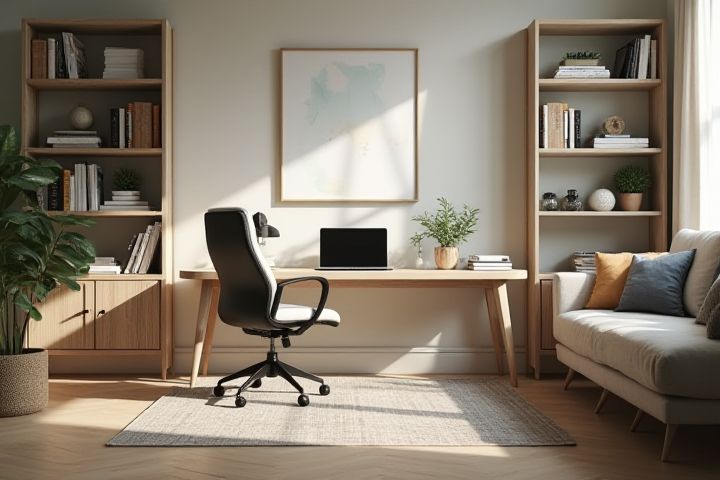
When selecting a house with a designated home office, prioritize space for productivity and comfort. Evaluate the floor plan to ensure the office is separated from distractions, ideally with adequate natural light and ventilation. High-speed internet access is essential, so confirm the availability and reliability of connection options in that area. Consider soundproofing features to minimize external noise, allowing for a focused work environment. Finally, think about future flexibility, such as the potential to adapt the space for evolving work needs or family requirements.
What To Consider In A House With Home Office
Dedicated space for privacy
When selecting a house suitable for a home office, prioritize a dedicated space that ensures privacy, enabling you to concentrate on work without distractions. Look for a room with a door that can be closed, ideally away from high-traffic areas of the home, to minimize noise and interruptions. Additionally, consider soundproofing options such as thick curtains or insulated walls to enhance your focus during important calls or meetings. A well-organized and secluded workspace can significantly boost your productivity, keeping your professional and personal lives distinct.
Natural lighting availability
When evaluating a house for a home office, prioritize spaces with ample natural lighting, as this enhances productivity and overall well-being. Look for rooms with large windows or skylights that allow sunlight to illuminate the workspace, ideally providing at least six hours of direct sunlight each day. Consider the orientation of the home; south-facing windows typically receive the most consistent light throughout the day. Additionally, assess how light changes during different seasons to ensure your office remains bright and inviting year-round.
High-speed internet access
When evaluating a house for a home office, ensure it offers high-speed internet access with a minimum of 100 Mbps download speed for optimal performance. Check if the property is within a reliable broadband provider's coverage area, as this can greatly affect connectivity options. Consider the availability of wired connections, like fiber-optic internet, which is often more stable than wireless alternatives. Lastly, assess the layout of the home to guarantee that your workspace can be situated in a location with the best signal strength, allowing you to work efficiently and effectively.
Adequate electrical outlets
When selecting a house for a home office, ensure it has at least two to three dedicated electrical outlets in your workspace. Each outlet should ideally support a power rating of 15 to 20 amps, accommodating multiple devices such as computers, printers, and monitors. Consider the layout; having outlets positioned close to your desk can reduce the clutter of extension cords and improve safety. Moreover, check if the wiring is up to date, as older homes might require electrical upgrades to support your technology needs efficiently.
Ergonomic furniture options
When setting up a home office, prioritize ergonomic furniture to enhance comfort and productivity. Invest in an adjustable desk that allows you to alternate between sitting and standing, reducing strain on your back and neck. A supportive chair with lumbar support and adjustable features ensures that your posture remains optimal during long work hours. Don't overlook accessories like keyboard trays and monitor stands, which help maintain proper alignment, promoting a healthier work environment.
Soundproofing for noise reduction
When selecting a house for a home office, prioritize locations with soundproofing features, such as double-glazed windows that can reduce noise by up to 30 dB. Consider choosing a property with solid-core doors, which enhance privacy and limit sound transmission between rooms. Look for insulation materials like acoustic foam or mineral wool, as they effectively absorb sound and create a quieter workspace. Additionally, think about room layout, positioning your office away from high-traffic areas or noisy streets to further minimize disturbances.
Proper ventilation and air quality
Proper ventilation is essential in a home office to ensure a healthy work environment; aim for windows that can be opened easily or incorporate a mechanical ventilation system with a minimum of 0.35 air changes per hour. Air quality significantly impacts productivity; consider using air purifiers with HEPA filters to reduce allergens and pollutants, especially if your workspace is near high-traffic areas. Indoor plants like snake plants and peace lilies can enhance air purification while adding aesthetic value, promoting a calming atmosphere. Regular maintenance of HVAC systems is crucial; replacing filters every 3 months can improve air flow and quality in your dedicated workspace.
Storage and organizational solutions
When designing a home office within your house, prioritize effective storage and organizational solutions to enhance productivity. Invest in multi-functional furniture, such as desks with built-in shelves or filing cabinets, to maximize space efficiency. Utilize vertical space by incorporating wall-mounted shelves or pegboards that allow easy access to essential items, while keeping your work area clutter-free. Consider implementing smart storage solutions, like labeled bins or drawer dividers, to ensure that documents and supplies are systematically organized for optimal workflow.
Aesthetic harmony with home
When selecting a house suitable for a home office, prioritize aesthetic harmony between your workspace and the rest of your home. Consider architectural elements, such as open floor plans, that promote a seamless flow between areas while using complementary colors and materials. It's crucial to ensure ample natural light, ideally with windows facing north or east, which can enhance both productivity and ambiance. Incorporating stylish storage solutions can maintain a clean aesthetic, allowing you to personalize your office space without compromising the overall design of your home.
Security for sensitive information
When selecting a house with a home office, prioritize security measures for sensitive information. Look for properties equipped with robust security systems, such as surveillance cameras and alarm systems, which can significantly deter unauthorized access. Additionally, consider homes with secure data storage options, including locked filing cabinets and fireproof safes, to protect confidential documents. Ensure that the internet connection is safeguarded with a virtual private network (VPN) and strong Wi-Fi passwords, providing an added layer of protection against cyber threats.