
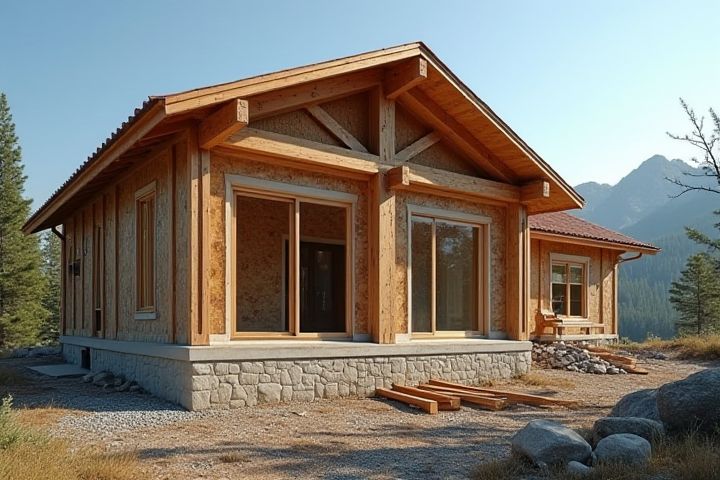
An earthquake-proof house incorporates specific design and construction features to enhance its structural integrity against seismic activity. These homes often include a strong foundation, such as a reinforced concrete slab or deep pilings, which anchor the building firmly to the ground. Additionally, flexible materials, like steel or engineered wood, are used in the framing to absorb and dissipate seismic forces, allowing the house to sway without collapsing. Properly installed shear walls and cross-bracing further increase the building's resistance to lateral forces during an earthquake. You should also consider retrofitting older homes with modern reinforcement techniques to improve their overall earthquake safety.
What Makes A House Earthquake-Proof
Base isolation
Base isolation is a crucial technique that enhances the earthquake resilience of a house by decoupling the structure from ground motion. This system typically involves the installation of flexible bearings or pads, which can absorb and dissipate seismic energy, allowing the building to move independently from the shaking ground. Homes equipped with base isolation can reduce lateral forces by up to 90%, significantly minimizing structural damage. By implementing this technology, you can protect your investment and ensure the safety of your family during seismic events.
Reinforced concrete
Reinforced concrete significantly enhances a house's earthquake-proof capabilities by incorporating steel reinforcement bars (rebar), which provide tensile strength to the otherwise brittle material. This combination allows the structure to better absorb seismic forces, reducing the likelihood of cracks or collapses during an earthquake. In locations with high seismic activity, using reinforced concrete not only improves structural integrity but can lower insurance premiums by minimizing damage risk. A well-designed reinforced concrete framework can withstand ground motions, making it a crucial feature for your earthquake-resistant home.
Steel framing
Steel framing significantly enhances a house's earthquake resistance because of its inherent strength and flexibility. Unlike traditional wood framing, steel can withstand high levels of stress without fracturing, allowing structures to absorb seismic energy more effectively. Additionally, the lightweight nature of steel reduces the overall load on the foundation, minimizing the risk of collapse during seismic events. Incorporating steel framing into your home's design offers a durable, long-lasting solution that meets modern engineering standards for earthquake safety.
Shear walls
Shear walls are essential components that enhance a house's earthquake resistance by counteracting lateral forces generated during seismic activity. Constructed from reinforced concrete or masonry, these vertical structures are strategically placed to provide additional stiffness and strength, minimizing the risk of structural failure. By effectively distributing and dissipating seismic energy, shear walls can significantly reduce sway, ensuring that the house remains stable as the ground shakes. Incorporating shear walls in your home design can increase its resilience, offering peace of mind in earthquake-prone areas.
Flexible foundation
A flexible foundation is critical for making a house earthquake-proof, as it allows the structure to absorb and dissipate seismic energy. By utilizing materials such as rubber or engineered wood, a flexible foundation can adapt to ground movements, minimizing stress on the building. This adaptability can significantly reduce damage during a quake, given that around 80% of earthquake-related building failures are linked to inadequate foundations. Implementing a flexible foundation can enhance the overall resilience of your home, ensuring safety and structural integrity against seismic events.
Secure roof connections
Secure roof connections are essential for creating an earthquake-proof house, as they enhance structural integrity during seismic events. Employing metal straps or brackets to tightly fasten the roof to the walls can significantly reduce the likelihood of roof displacement, which often leads to catastrophic failure. Studies indicate that homes with properly secured roofs experience up to 50% less damage during earthquakes, thereby ensuring the safety of occupants and safeguarding possessions. By prioritizing robust roof connection techniques, you effectively bolster your home's resilience against seismic forces.
Seismic dampers
Seismic dampers are crucial components in earthquake-proof houses, designed to absorb and dissipate energy during seismic events. These devices can reduce vibrations by up to 75%, significantly increasing a structure's stability. With advancements in materials, modern dampers, such as viscous and friction-based types, are engineered for efficiency, enhancing a building's overall resilience. Investing in a house equipped with seismic dampers not only protects your investment but also ensures the safety of its occupants during an earthquake.
Cross-bracing
Cross-bracing is a crucial technique in constructing earthquake-proof houses, providing enhanced structural stability. By incorporating diagonal braces, typically made from steel or reinforced wood, the framework can effectively distribute and absorb seismic forces during an earthquake. This method significantly reduces the risk of lateral movement, which can cause catastrophic structural failure. When designing or retrofitting your home in an earthquake-prone area, consider the effectiveness of cross-bracing as a cost-efficient solution for improving safety and resilience.
Shock absorbers
Shock absorbers are critical components in making a house earthquake-proof, as they significantly reduce the impact of seismic forces on the structure. By using advanced materials and engineering designs, shock absorbers can dissipate energy and minimize vibrations that occur during an earthquake, enhancing stability. An effective shock-absorber system allows a house to undergo lateral movement without sustaining severe damage, often improving overall safety for its occupants. Investing in quality shock absorber technology can potentially increase your home's resilience, contributing to lower repair costs and better protection during seismic events.
Quality construction materials
Quality construction materials play a pivotal role in making a house earthquake-proof, with reinforced concrete, steel reinforcements, and high-grade wood being paramount. For instance, using steel beams can increase structural integrity, providing flexibility that helps absorb seismic forces. Furthermore, applying resilient, flexible materials helps reduce the chances of catastrophic failure; buildings designed with such materials have been shown to withstand tremors effectively. Prioritizing these materials can result in homes that not only endure earthquakes but also offer long-term safety and resilience, ensuring your peace of mind.