
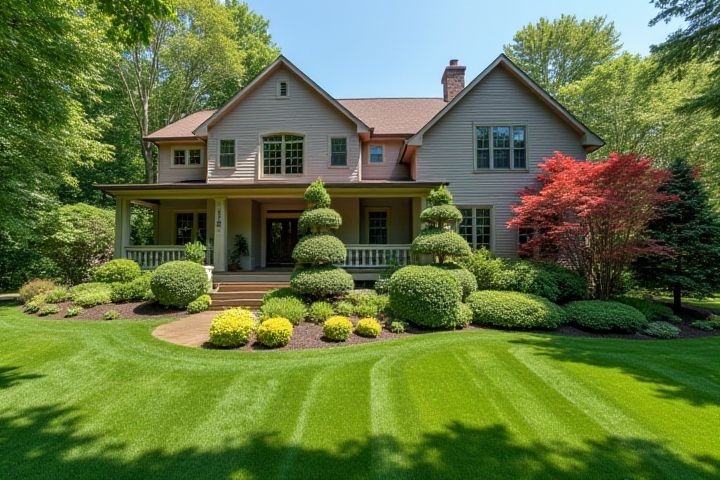
Start by assessing your home's architectural style and the existing landscape to create a cohesive design. Incorporate native plants that thrive in your local climate, as they require less maintenance and support local wildlife. Consider adding hardscape elements, such as pathways, patios, or retaining walls, to provide structure and functionality to your outdoor space. Utilize outdoor lighting to enhance the beauty of your landscape at night while ensuring safety along walkways. Finally, create defined areas for lounging or entertaining by using garden beds or screens to add privacy and visual interest to your home's exterior.
How To Landscape A House
Conduct a site analysis
Conducting a site analysis for landscaping involves evaluating your property's unique features and requirements. Begin by assessing the soil type, drainage patterns, and sunlight exposure, as these factors influence plant selection and placement. Document existing structures, such as patios and fences, as well as natural elements like trees and slopes, which can guide design choices. Finally, consider local climate conditions and microclimates, aiming to create a sustainable landscape that enhances your home's aesthetic while promoting biodiversity.
Plan your layout and design
Begin by measuring your property to determine the size and shape of the landscape area, aiming for a balance between hardscaping features like patios and walkways and softscaping elements such as gardens and lawns. Utilize a scale drawing to plot your intended layout, incorporating specific zones for entertainment, relaxation, and plant beds, while considering the sun exposure and soil conditions. Choose native plants that thrive in your region to reduce maintenance and support local wildlife, ensuring you establish a diverse palette of colors and textures. Finally, plan for irrigation and drainage systems to keep your landscape healthy and sustainable throughout the seasons.
Choose suitable plants
Choosing suitable plants for your landscape is essential for both aesthetics and growth. Consider your local climate zone; for instance, USDA hardiness zones range from 1 to 13, influencing plant survival. Select native species, as they typically require less maintenance and are more resilient, providing habitat for local fauna. Aim for a diverse mix, incorporating perennials, shrubs, and ornamental grasses to ensure year-round visual interest while promoting a balanced ecosystem.
Consider water management
Incorporating effective water management into your landscaping can significantly enhance the sustainability and health of your garden. Utilizing rain barrels can capture up to 50 gallons of rainwater, which can be used to irrigate your plants, reducing reliance on municipal water sources. Implementing permeable paving allows water to soak into the ground, minimizing runoff and helping to replenish groundwater supplies, while strategically placed native plants require less water and are well-adapted to the local climate. By designing your landscape with proper drainage and water-absorbing features, you can create an aesthetically pleasing environment that conserves water and promotes plant vitality.
Focus on soil improvement
Improving soil quality is crucial for successful landscaping, as healthy soil supports robust plant growth. Begin by testing your soil pH, aiming for a slightly acidic range of 6.0 to 7.0 to ensure optimal nutrient availability for plants. You should incorporate organic matter, such as compost or well-rotted manure, at a rate of 2 to 3 inches in depth to enhance soil structure and fertility. Regularly aerating your soil also allows for improved drainage and root penetration, which can significantly boost the health of your landscaping.
Implement hardscaping elements
Incorporate hardscaping elements such as patios, walkways, and retaining walls to define outdoor spaces and enhance your home's curb appeal. Selecting durable materials like pavers, bricks, or natural stone can create stunning visual contrasts with softscape components like plants and lawns. When installing features, consider a layout that complements the architecture and surrounding environment, ensuring ease of movement and accessibility. Incorporate dual-purpose elements such as benches or planters, which not only add functionality but also contribute to the overall aesthetic of your landscape design.
Create focal points
Create focal points in your landscaping by incorporating elements that draw the eye and enhance the overall design of your property. Consider installing a striking fountain, which can increase the aesthetic appeal while promoting relaxation with the soothing sound of flowing water. Incorporate vibrant flower beds or unique sculptures strategically placed to highlight pathways and entrances, ensuring that they stand out against the greenery. Lighting features, such as solar path lights or spotlights on key landscape elements, can also enhance visibility at night, further emphasizing your focal points and creating a welcoming ambiance.
Prioritize functionality and accessibility
When landscaping your house, consider incorporating pathways that lead to essential areas such as entrances, gardens, and seating spaces, ensuring a width of at least 3 feet for easy navigation. Integrating raised garden beds can not only enhance visual appeal but also promote accessibility for individuals with mobility challenges, maintaining a height of 24 to 36 inches for comfortable reach. Install hardscaping elements like patios and decks, using slip-resistant materials to create safer transitions between your home and outdoor areas. Incorporating native plants requires lower maintenance and provides environmental benefits, fostering a sustainable landscape while ensuring functionality for your lifestyle.
Ensure proper maintenance
To ensure proper maintenance of your landscape, regularly assess plant health and replace any dead or diseased specimens promptly. Implement a consistent watering schedule, adjusting for seasonal changes, to promote robust growth and minimize water waste. Mulching around plants not only conserves moisture but also suppresses weeds and enhances soil health. Incorporating native plants into your landscape can significantly reduce maintenance needs while supporting local ecosystems.
Incorporate sustainable practices
Incorporating sustainable practices in your landscaping can significantly enhance your home's environmental footprint. Start by selecting native plants, which typically require less water and maintenance; for instance, using xeriscaping techniques can reduce irrigation needs by up to 70%. Implementing permeable paving in your walkways and driveways allows rainwater to infiltrate the soil, which mitigates runoff and replenishes groundwater. You can also create a composting area to recycle kitchen waste into nutrient-rich soil, enriching your garden while reducing landfill contributions.